
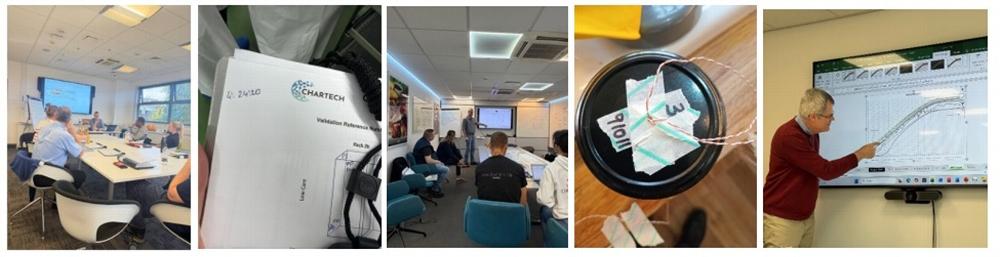
Training That Makes a Difference:
Taking Knowledge from the Classroom to the Factory Floor
Training has always been important, but increasingly, it is becoming a significant part of what we do at Chartech Ltd.
Over the past couple of months, I've delivered several training courses, covering both Process Control and Thermal Processing, and on one occasion, stepping outside the food industry altogether. It's been a busy and rewarding period, and it has reinforced something I've believed throughout my career: the real value of training isn't just what people learn during the course, but what they do with that knowledge afterwards.
Practical knowledge, not just theory
At Chartech, our training is built around practical application.
Understanding the theory is important, but knowing how to apply it in a real manufacturing environment is what makes the difference. Factory processes rarely behave exactly as they do in a textbook. There are variables, constraints, competing priorities and, occasionally, a few surprises along the way!
That's why I aim to make our courses as interactive as possible. We encourage questions, challenge assumptions and work through real-world situations, helping delegates understand not just what to do, but why they are doing it.
With 36 years of experience across the food industry, I've had the opportunity to see what works, what doesn't, and what happens when we misunderstand the process we're trying to control. Wherever possible, I bring that experience into the training room, sharing practical examples and lessons learned along the way.
After all, some of the most valuable lessons come from understanding why something didn't go to plan in the first place.
Process Control and Thermal Processing - sometimes together
Our training focuses on two key areas: Process Control and Thermal Processing.
Although they can be delivered separately, there are occasions when combining the two makes perfect sense.
Thermal Processing is a good example. Understanding heat penetration, process lethality and validation is essential, but these are only part of the picture. We also need to understand the variables that influence the process, how consistently the equipment operates, and how to recognise when something is changing.
A process can be validated, but that doesn't automatically mean it is consistently under control.
By bringing Process Control and Thermal Processing together, we can help people develop a broader understanding of their operation — moving beyond simply following procedures towards understanding how their process behaves, what influences its performance and where opportunities for improvement exist.
That is where training can start to deliver real value.
The training doesn't stop when the course ends
One of the things I feel strongly about is what happens after the training.
Delegates can leave a course feeling confident about what they have learned, only to return to a busy factory where putting new ideas into practice can be challenging. Production pressures, established routines and unexpected problems can quickly push learning down the priority list.
That is why our courses include three months of remote support.
It gives delegates the opportunity to revisit what they have learned, ask questions as they apply it, and work through practical challenges in their own environment. It also helps bridge the gap between understanding a concept during training and using it confidently in everyday work.
For me, this is an important part of the learning journey. Training should not be a one-off event; it should be the starting point for developing knowledge, confidence and capability within the business.
Learning is a two way street
One of the things I enjoy most about delivering training is the interaction with delegates.
Every factory is different. Every process has its own challenges, and every group brings a different mix of experience, questions and perspectives. That makes interactive training particularly valuable.
I may bring 36 years of industry experience into the room, but I also learn from the conversations, challenges and experiences shared by the people attending.
Stepping outside the food industry recently was a useful reminder that, although the technical challenges may differ, many of the underlying principles of process control remain relevant across different manufacturing environments.
Good training creates the space to explore those connections, challenge conventional thinking and look at familiar problems from a different perspective.
Building capability for the future
As training continues to grow as part of Chartech, my focus remains the same: delivering practical, relevant training that helps people understand their processes and make better decisions.
Whether the subject is Thermal Processing, Process Control, or a combination of the two, the aim is to build capability — giving people the knowledge and confidence to tackle problems, improve performance and take greater ownership of their processes.
Because ultimately, the goal isn't to make businesses dependent on external support. It's to help them develop the understanding and skills to manage their processes more effectively themselves.
Training is an investment in people, but its real return is seen in the improvements they make when they put that learning into practice.
And that's what we're working towards at Chartech: building better understanding, stronger capability and better processes, together.
brendan.charles@chartech.co.uk
+44(0)7928 428954